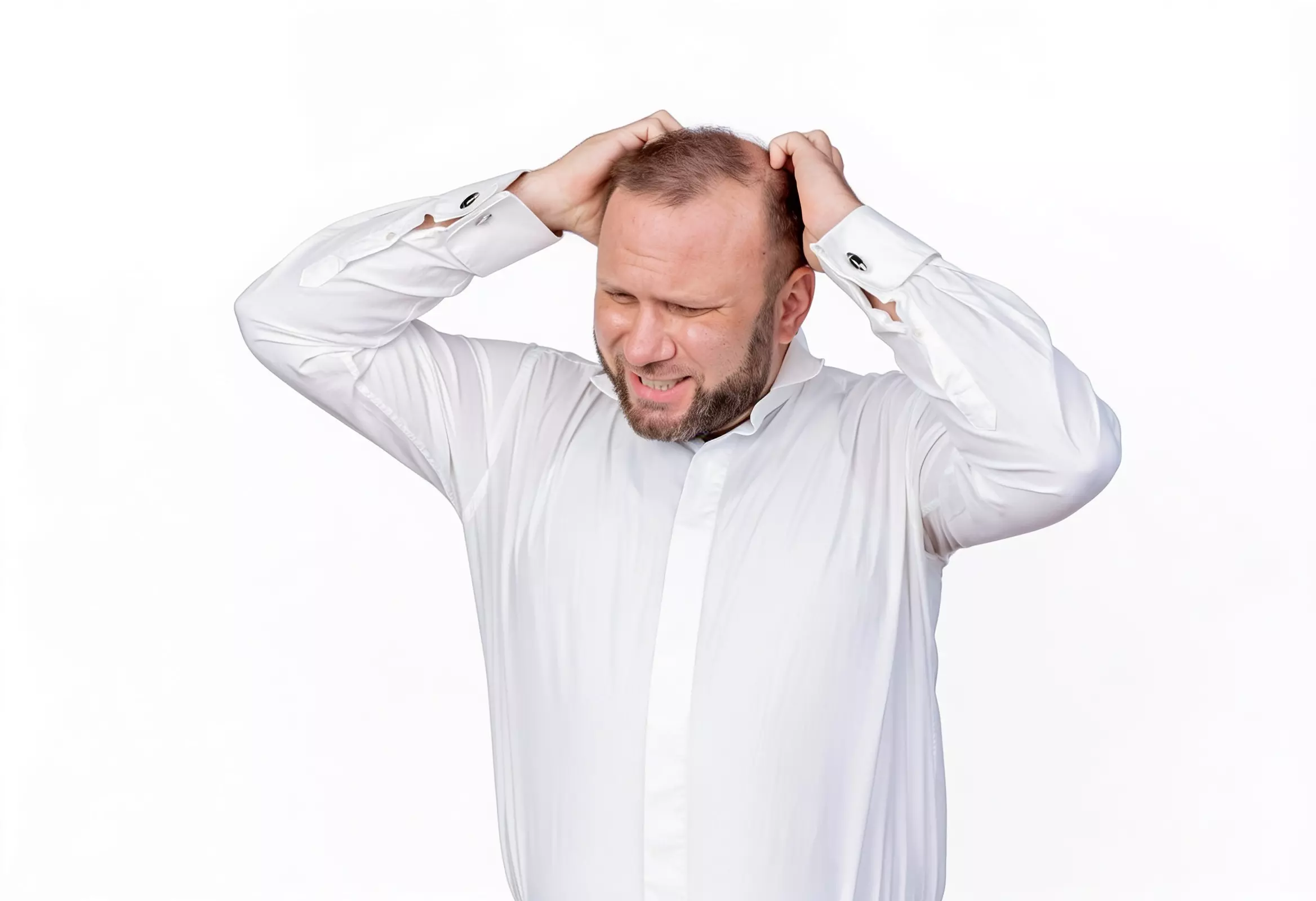

Hair loss is common among men, women, and even teens. However, men often notice hair shedding during everyday activities like washing or brushing.
One major cause of hair loss is chronic stress, which can disrupt the hair growth cycle. This leads to hair thinning and shedding, which can affect confidence, self-esteem and overall emotional well-being.
Certain causes and symptoms can help you identify stress-related hair loss. There are also ways to help regrow hair.
How Does Hair Loss Occur Due to Stress and Anxiety?
Stress primarily affects the body’s natural hair growth cycle, which consists of three main phases:
- Anagen – Hair growth occurs during this phase.
- Catagen – Follicles shrink due to reduced blood supply.
- Telogen – Hair growth stops and old hair strands shed, creating space for new hair growth.
When cortisol and other stress-related hormones reach high levels, they interfere with the natural hair growth cycle. They push hair into the resting (telogen) phase, causing hair thinning and loss.
This can happen due to high physical or emotional stress or nutritional deficiencies. These factors make it harder for hair follicles to recover, leading to hair loss.
Symptoms of Hair Loss Due to Stress
Many people wonder if their hair loss is caused by stress or anxiety. Here are common signs of stress-related hair loss:
Hair Loss After Illness
If you notice heavy hair loss weeks or months after surgery, illness, or a stressful event, it may be stress-related.
Hair Thinning on Temples or Scalp
Chronic stress causes hair thinning across the temple areas and the scalp. This may be linked to scalp inflammation.
Slow & Delayed Hair Growth
Stress-induced hair loss hinders hair follicle recovery. Therefore, it leads to delayed hair growth. It may take a few months to a year for hair to grow to proper density.
How to Regrow Hair Lost Due to Stress
Stress-related hair loss is often temporary, and with proper care and treatment, hair regrowth is possible in many cases. Here are some tips to help regrow your hair:
Manage Stress Effectively
Since stress is a key cause, managing it regularly is important. This includes mindfulness, meditation, deep breathing, yoga, and regular exercise. These habits help lower stress hormones and support healthy hair growth.
Proper Scalp Care with Gentle Products
Use gentle, chemical-free products to care for your scalp and hair. Also, be sure to style your hair gently without stretching it to support healthy growth.
Fulfill Nutritional Requirements
A healthy diet supports scalp health and hair growth. Essential vitamins can help speed up recovery.
Key vitamins include Vitamin D, B-complex (B7 & B12), Vitamin C, Zinc, Magnesium, and Iron. They support follicle health and help it recover from stress-related damage.
Consult a Hair Loss Specialist
If hair regrowth is slow, consulting a hair loss specialist may help identify the underlying cause and appropriate treatment options. A professional may recommend solutions such as PRP Therapy (Platelet-Rich Plasma), scalp treatments, or other therapies to support healthier hair growth and recovery.
Our team at New Image Hair Clinic is happy to help you explore treatment options. Schedule a free consultation today!
Conclusion
Stress is a major factor responsible for hair loss in men. So, it’s important to focus on reducing stress to support hair follicle health and overall hair growth.
If hair loss is severe and doesn’t improve even after following the hair care routine, consult a professional dermatologist for personalized treatment.
If you’re seeking hair loss treatments for men and live in Pennsylvania, New Image Hair Clinic can help. We use a customized approach and conduct hair follicle analysis to design effective treatments for dense hair growth.
Whether your hair loss is due to stress or other causes, we offer personalized solutions for your hair concerns. Contact us today to learn more.
FAQs
Will hair loss from stress grow back?
Yes, stress-induced hair loss is not permanent, and hair growth can resume with proper stress management.
How do I stop hair falling out due to stress?
Effective stress management is one of the best ways to prevent hair loss from stress. Practice yoga, mindfulness, meditation, engage in physical exercise, and eat a nutritious diet to stop hair fall and ensure fast recovery.
What does stress-related hair loss look like?
If hair loss is due to stress, common symptoms include hair thinning and delayed hair growth. Many people first notice excessive hair falling out while brushing, washing, or styling their hair. Hair may also appear thinner around the crown, temples, or along the part line.
How long does anxiety hair loss last?
Anxiety-induced hair loss (telogen effluvium) lasts for around 3-6 months after a stressful event such as surgery, illness, or trauma. Hair regrowth may take 6-9 months or up to a year, depending on how effectively stress is managed.