
At What Age Do Men Start Balding?
Hair loss with age is common among men, but most begin to experience it at an early age. According to the American Hair Loss Association, hair loss in men starts as early as their 20s.
Here is a breakdown of when male balding starts and the percentage of hair loss associated with each age group:
| Age | Percentage of Hair Loss by Age |
|---|---|
| Age 20 | ~ 25% of men start to lose hair before age 21 |
| Age 35 | ~ 66% of men notice severe hair loss |
| Age 50 | ~ 50% of men experience severe hair thinning |
5 Major Causes Why Most Men Start Balding
While male pattern baldness is primarily hereditary, non-hereditary factors can also cause severe hair loss in men.
- Genetics
If someone in your family experiences hair loss at an early age, you may also be at risk for male pattern baldness. According to the National Library of Medicine report, frontal male pattern hair loss is prevalent among men aged 18-49.
- Poor Lifestyle
Men’s hair health depends mainly on lifestyle. Chronic stress, lack of proper sleep, and poor nutrition contribute to severe hair loss in men.
- High DHT Levels
Hormonal changes, especially a rise in dihydrotestosterone (DHT) levels, could promote hair loss. The DHT hormone leads to hair thinning and, eventually, hair loss in men.
- Medical Issues
Medical conditions such as thyroid or autoimmune diseases lead to hair loss. Moreover, side effects of medications could also contribute to hair thinning or loss.
- Exposure to Harsh Chemicals & Toxins
Environmental factors such as pollution, toxins, or harmful chemicals also damage hair by reducing its thickness.
Early Signs of Balding in Men
Understanding the typical age for male hair loss and its primary triggers is the first step toward management. By recognizing early indicators of thinning, you can implement proactive strategies to mitigate significant hair loss.
Here are hair loss signs you shouldn’t ignore:
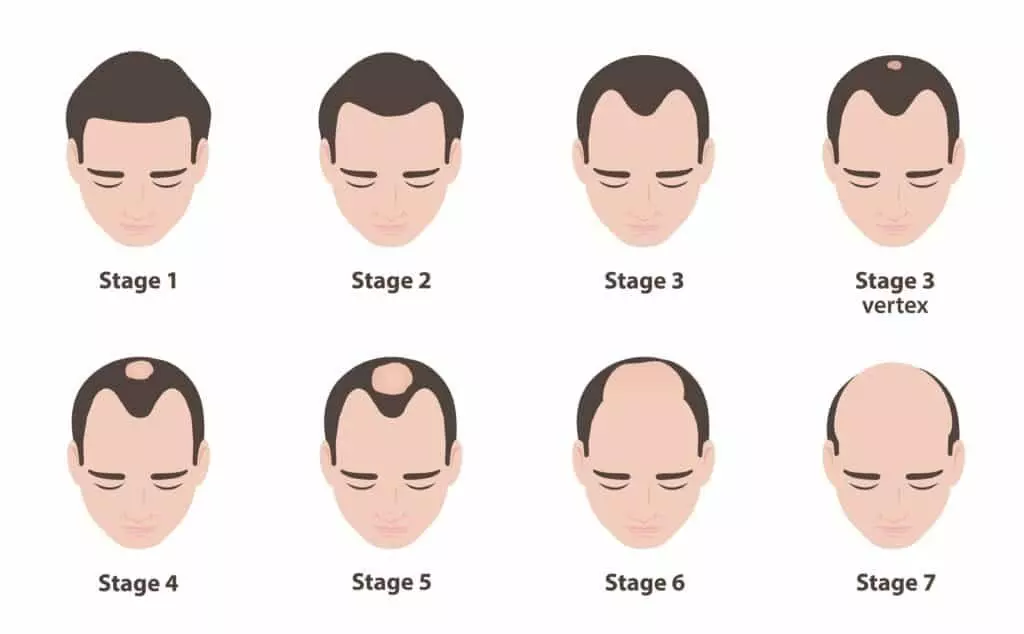
- Receding Hairline
When you notice a receding hairline and a broader forehead, it is one of the early signs that you are experiencing hair loss.

- Thinning at the Crown Area
Once you observe a decrease in hair volume at the crown of your head, it is essential to begin taking proactive measures to prevent further balding.
- Reduced Hair Density
A reduction in hair density is another sign that becomes apparent when men start going bald. This can make the scalp more visible under bright lights or when the hair is wet.
- Changes in Hair Texture
Men notice changes in their hair texture and begin to experience hair thinning in the early stages of balding.

5 Easy Tips to Reduce Balding in Men
If you take certain actions in time, it’s possible for you to prevent hair loss.
- Reduce Stress
Lower your stress levels by engaging in physical activities, yoga, and meditation. It plays a crucial role in reducing chronic stress and promoting hair growth cycles.
- Eat Healthy Foods
Eating nutritious foods rich in essential vitamins and minerals can help you keep your hair healthy.
- Keep Yourself Hydrated
Drink at least 8 glasses of water throughout the day to keep your body properly hydrated. It helps in hair hydration and keeping your hair strands strong.
- Use Personalized Hair Products
Every person’s scalp is different, so it is important to use non-toxic and gentle hair products that suit your scalp. You can do a patch test on your scalp to ensure you use the right hair products.
- Massage Your Scalp
Massaging your scalp with healthy hair oils is essential for maintaining proper blood flow. It also helps to enhance your overall hair health and strength.
Best Treatments for Hair Loss in Men
Managing hair loss and thinning involves choosing from various effective approaches, including medicinal, non-surgical, and surgical paths. Selecting the right method depends on your unique situation and personal goals.
To address balding at different life stages, consider these primary treatment categories:
- Consider Hair Growth Medications
One treatment for hair loss is using medications such as Minoxidil (topical) or Finasteride (prescription). They are effective at slowing hair loss and boosting hair growth when used consistently for 3-6 months.
- Surgical Hair Growth Treatments
Hair transplants using techniques such as Follicular Unit Transplantation (FUT) or Follicular Unit Extraction (FUE) are effective for growing thicker hair and improving overall appearance. However, they require proper hair care and take around 18 months to show favorable results.
- Non-Surgical Hair Growth Options
If you don’t want surgical hair transplantation, you can select non-surgical hair growth treatments such as Laser Therapy or Platelet-Rich Plasma (PRP) Therapy.
These techniques are effective in improving your hair follicle health and promoting hair regeneration. You will notice an improvement in the strength of your hair after maintaining a consistent routine for a while.
- Hair Restoration, Replacement Systems, or Wigs
Some other options to deal with male baldness include hair restoration, replacement systems, hair extensions, and hair wigs. These can help you enhance your overall look without undergoing surgical hair treatments.
If you are looking for the best hair loss treatments for men in Pennsylvania, New Image Hair Clinic is here to help you. We provide top-notch surgical and non-surgical hair treatments to help improve your hair's look, style, and overall appearance.
Conclusion
It’s important for men to take necessary measures and undergo treatments at the early stages of hair loss. If you’re struggling with hair loss, it’s wise to act early and take preventive measures to restore your hair density.
Schedule your free confidential consultation today at New Image Hair Clinic.
FAQs
1. At what age do most men go bald?
Most men start noticing balding between the ages of 25 and 35. Though they may experience severe hair loss by 35, the situation worsens by 50 for most men.
2. Is balding all genetic?
No, balding isn’t 100% genetic. Male pattern baldness is primarily inherited and linked to sensitivity to dihydrotestosterone (DHT), but that isn’t the only contributing factor. Many other factors, such as poor lifestyle, exposure to toxins or harsh chemicals, medical issues, and stress, also lead to hair loss.
3. Is hair loss at 25 normal for men?
Yes, it isn’t abnormal for men to experience hair loss at 25. Most men start to notice a receding hairline and a wider forehead in their mid-20s. It primarily occurs due to genetics, and you should seek expert hair treatment if you experience excessive hair loss.
4. How to know if a man will go bald?
A man will most likely go bald if there is:
Family history of baldness.
Sudden & excessive loss of hair.
Noticeable receding hairline.
Loss of hair in the crown area of the head.
5. Can I go bald if my dad isn't?
Yes, you can still go bald if your dad isn’t. It’s because hair loss genes can be inherited from either side of the family. If a close male relative from your mother’s side experienced baldness, you might as well face it due to inherited genes.
6. How long does it take for thinning hair to go bald?
Usually, it takes about 15-35 years for thinning hair to progress to baldness. However, it could be accelerated by genetics and other factors. The baldness begins with a receding hairline on the sides (temples) and the thinning of hair at the top of the head.